
Painting in Missouri City
Forty-year-old trim in Quail Valley, first repaints in Sienna, humidity working on every exterior in between, Castle Construction paints Missouri City homes with prep-first discipline and cut lines that hold up to a hard look.
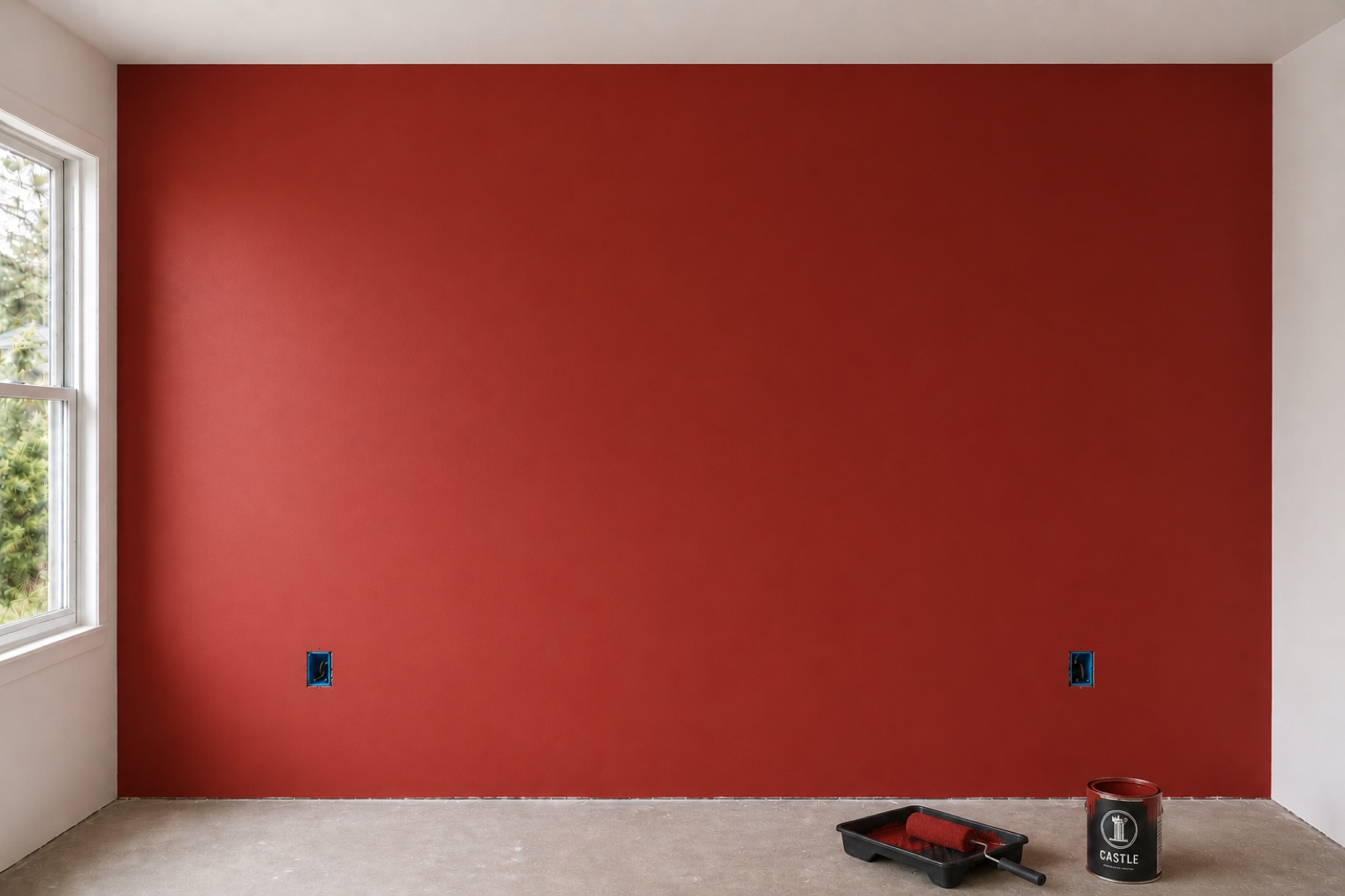
Painting in Missouri City is really two different trades. In Quail Valley and the other seventies-and-eighties neighborhoods, it is restoration, walls, ceilings, and mile after mile of aging trim brought back as these homes turn over to new owners. In Sienna, Riverstone, and the nineties neighborhoods, it is maintenance and upgrade, replacing thin builder coats with paint systems that can take a family's daily wear. Castle Construction does both, and the constant is prep: repairs first, the right primer for the specific problem, then two honest coats.
The Full Quail Valley Refresh
When a Quail Valley home changes hands after thirty or forty years with one owner, the interior usually needs everything at once: popcorn down, texture addressed, and then paint on every surface in the house. That final paint stage is where the project succeeds or dies, because these interiors carry decades of accumulated dings, old sheen changes, and colors from three different eras.
We paint these as full systems. Walls get repaired and primed where surfaces changed, then two coats in a modern washable finish. Ceilings get flat ceiling paint that evens out the new skim work. And the trim, often original, often layered, gets degreased, sanded, filled, and coated in enamel that makes forty-year-old casings read crisp again. The before-and-after on a whole-house Quail Valley repaint is the biggest visual payoff per dollar in remodeling, and we never get tired of it.
Trim, Doors, and the Tannin Problem
Missouri City's older neighborhoods are full of stained woodwork, oak rail, pine casings, solid doors from an era when builders used real lumber. Most owners now want it painted, and this is where cut-rate jobs fail publicly: paint straight over stained wood and tannin bleed pushes yellow-brown ghosting through within months, especially at the grain of oak.
The correct sequence is not complicated, it is just slower. Degrease, scuff-sand for adhesion, then seal with a shellac-based or dedicated stain-blocking primer that locks the tannins down. Fill the dings and caulk the coped corners and joints, then lay two coats of quality enamel, brushed and rolled or sprayed depending on the setting. Doors get the same system plus time to cure before they close against weatherstripping. Do it in this order and painted trim stays white; skip a step and the wood tells on you by spring.
Sienna and the First Repaint Cycle
Sienna's earlier sections are crossing the ten-to-fifteen-year mark, which is exactly when original builder paint gives up. It was one thin coat of flat when it was new, and by now it is scuffed at every corner, faded around the windows, and dotted with touch-up patches that flash a different sheen at certain angles. Touch-up stops working entirely at this age, the wall color has drifted from the can color.
The first full repaint is the one that matters most, because it sets the surface for the next decade. We correct the accumulated drywall issues first, nail pops, corner cracks, the dings of a decade of family life, then prime repairs and roll two full coats of washable paint with clean cut lines at ceilings and tight caulk at the trim. Castle Construction treats it as a reset, not a recolor, and the difference shows every day after.
Exteriors Against Humidity, Sun, and Shade Mildew
Missouri City exteriors fight on two fronts. South and west faces take the UV beating, chalking, fading, caulk joints splitting at the trim. North faces and anything shaded by the mature trees in Quail Valley or Lake Olympia fight mildew, which will bloom straight through fresh paint if the surface was not treated before coating. Most failed exterior jobs we get called to redo skipped exactly that step.
Our exterior work is prep-weighted on purpose. Wash and mildew-treat everything. Scrape and sand to sound edges, spot-prime bare wood, and repair rot properly, cut out and replace, not caulk and hide, and as a construction crew we do that carpentry ourselves. Then re-caulk the joints and lay two coats of quality exterior acrylic. Every Castle Construction exterior includes:
- Pressure wash with mildew treatment, not just rinsing
- Rot cut out and replaced before paint
- Bare wood and stain spots primed for the specific problem
- Full re-caulk at trim joints and penetrations
- Two-coat quality exterior acrylic finish
Common Questions
How long does a whole-house interior repaint take in Missouri City?
A typical single-story runs about a week; a larger two-story Quail Valley home with full trim enamel work can run two. If popcorn removal or wall smoothing is part of the project, that sequence comes first and adds time. We give you a schedule up front and keep to it.
Is spraying or brushing better for repainting my old trim?
Both are legitimate, the prep underneath decides the result. Spraying lays glass-smooth enamel and suits empty homes mid-refresh; brush-and-roll suits occupied houses and holds its own with quality enamel and good technique. We recommend based on whether you are living in the house during the work.
Why did mildew come back through the paint on my shaded exterior wall?
Because it was painted over alive. Washing removes the visible bloom, but unless the surface is treated with a mildewcide solution first, the spores survive under the new coating and grow back through it. We treat, then prime where needed, then paint, that sequence is why our shaded walls stay clean.
Need this handled in Missouri City?
Straight answers, fair numbers, walls built like they matter.
Get a Free Quote