
Painting
Paint is the last thing we do and the first thing you see. Castle Construction preps like the finish depends on it, because it does, inside and out.
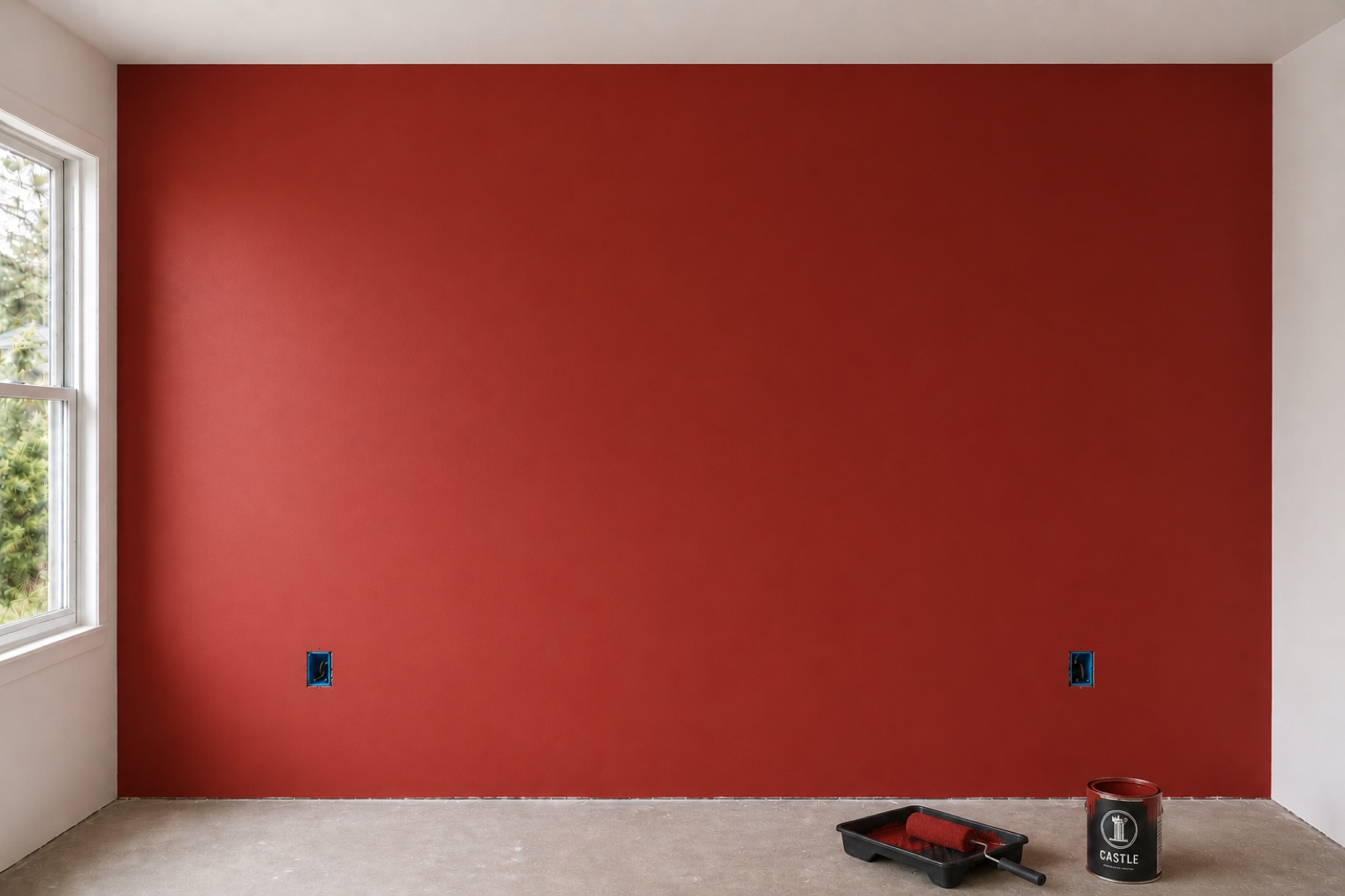
Anybody can open a can of paint. What separates a paint job that still looks sharp in year five from one that peels in year two happens before the lid ever comes off. We fill nail holes, caulk gaps, sand rough spots, and prime bare patches so the topcoat has something solid to grab. Then we cut clean lines, roll even coats, and back-roll where the surface calls for it. That is the whole trade in one sentence: prep hard, paint careful, inspect everything.
Castle Construction paints interiors and exteriors, from a single bedroom refresh to full siding repaints. Because we also hang and finish drywall, we know what a wall should feel like under your hand before paint touches it. If the surface is not right, we fix the surface, not hide it under another coat. One crew handles the wall and the finish, so there is no painter blaming the drywaller and no drywaller blaming the painter. The person who taped your seams is checking the wall under raking light before the primer goes on.
Prep Is 70 Percent of the Job
Walk into any paint job we run and you will see more sandpaper and caulk than paint for the first stretch. That is deliberate. Paint film is thin, and it telegraphs every flaw underneath it. A skipped patch shows. A gap between trim and wall shows. Glossy old paint that never got scuffed will shed a new coat like water off wax. So we spend the hours where they count: washing, scraping, filling, sanding, caulking, and spot-priming before a drop of finish goes on.
The prep-to-paint ratio on a quality job usually runs well past half prep. Homeowners are sometimes surprised when day one produces no color at all. But that day is why the color still looks right years later. Cheap paint jobs skip prep because prep is invisible on the invoice. Castle Construction builds it into every estimate because we would rather explain the hours up front than explain peeling paint later.
- Wash and degrease so paint bonds to the surface, not the grime
- Fill holes and cracks, then sand flush
- Caulk gaps at trim, corners, and joints before paint
- Scuff-sand glossy surfaces for adhesion
- Spot-prime patches and stains so they do not flash through
- Mask and drop-cloth everything you want kept clean
Our Process: Prep, Prime, Cut, Roll, Inspect
Every job runs the same sequence. First, protection: drop cloths down, furniture moved or covered, outlets and hardware masked. Then prep, as above. Priming comes next where it is needed, over patches, stains, bare wood, or big color changes, so the topcoat covers evenly instead of flashing dull spots where the repair soaked in. Then we cut in: brushwork along ceilings, corners, and trim, done with a steady hand and a quality angled sash brush, not tape and hope.
Rolling follows the cut while the edges are workable, using the right nap thickness for the surface, shorter nap for smooth drywall, heavier nap for texture, so the finish lays down uniform. Two coats is the standard, with sanding between coats on trim and doors where a slick finish matters. Last comes inspection under good light, touching up holidays and thin spots before we call it done. You walk it with us. If something bugs you, it bugs us.
Interior and Exterior, One Standard
Inside, the enemies are drips, rough walls, and crooked cut lines. Our interior painting covers walls, ceilings, trim, doors, and cabinets, with low-VOC options for occupied homes and a work sequence that keeps your household functioning while we move room to room. Ceilings get flat paint that hides imperfections. Trim gets durable enamel that takes a scrubbing. Every room gets masked, protected, and cleaned up nightly, because you live there and we are guests.
Outside, the enemies are sun, water, and time. Exterior painting starts with a wash, then scraping anything loose, sanding edges smooth, spot-priming bare wood, and caulking every gap that lets water behind the paint film. Peeling and alligatoring on an old exterior are almost never a paint problem, they are a prep problem from the last crew. We also handle staining and sealing for decks, fences, and doors, which is its own trade with its own rules, and we treat it that way.
Sheen and Color, Explained Straight
Sheen is not a style choice first, it is a durability choice. Flat hides wall imperfections but scuffs easily, so it belongs on ceilings and low-traffic walls. Eggshell is the workhorse for living spaces, a little washability without highlighting every roller mark. Satin steps up for kitchens, baths, and hallways where walls get wiped. Semi-gloss goes on trim, doors, and cabinets where hands land daily. Put the wrong sheen in the wrong room and you will either be repainting scuffs or staring at glare.
Color is where people freeze, and we get it. Paint chips lie under store lighting. That is why we offer a color consultation service with real sample boards tested on your walls, in your light, morning and evening. Undertones shift, north-facing rooms cool everything down, and the gray that looked calm on a chip can go purple at dusk. Test first, commit second. It costs a few days and saves a repaint.
- Flat: ceilings and low-traffic walls, hides flaws
- Eggshell: bedrooms and living rooms, soft and washable
- Satin: kitchens, baths, hallways, stands up to wiping
- Semi-gloss: trim, doors, and cabinets, hardest-working sheen
- Sample on the actual wall before committing to gallons
What Separates a 5-Year Job From a 2-Year Job
The paint in the can is maybe a quarter of the difference. The rest is what happens on the wall. A two-year job goes on over dirt, over gloss, over failing caulk, in one heavy coat rushed before the cut lines dried. It looks fine at the final walkthrough. Then seams crack, edges lift, tannin bleed ghosts through the white trim, and the sun finds every thin spot. By the second summer you are looking at touch-ups that do not match.
A five-year job is boring to watch. Surfaces washed and sanded. Stains and knots sealed with the right primer so nothing bleeds through. Two full coats of premium acrylic at proper spread rates, not one coat stretched thin. Caulk joints tooled so water and air stay out. The castle idea is not a slogan for us, it is the standard: build the foundation of the finish right and the finish holds. That is the whole difference, and it is all labor and discipline.
The Drywall Connection: One Crew, No Finger-Pointing
Here is a problem you have probably lived through: the drywaller says his finish was fine and the painter wrecked it, the painter says the walls came to him rough. You are stuck in the middle with a wall that looks bad and two trades pointing at each other. Castle Construction ends that argument by being both trades. We hang the board, tape and finish it, prime it, and paint it. Same company, same standard, same person to call.
It matters technically, too. New drywall needs the right primer or the paint flashes different sheens over joint compound versus paper. A Level 4 finish that looks fine in flat paint will show every seam under satin and window light, so we finish the drywall to match the paint plan, not the other way around. Patches from our handyman work get feathered, primed, and painted to blend, not just covered. When one crew owns the wall from stud to final coat, the wall shows it.
Painting services
Interior Painting
Walls, ceilings, and trim painted with sharp cut lines and honest prep, by a crew that treats your home like they have to come back and look at it.
Read more →Painting /Exterior Painting
Sun, rain, and time attack your siding every day. We wash, scrape, prime, and caulk before the first finish coat, because exterior paint fails at the prep, not the can.
Read more →Painting /Cabinet & Trim Painting
Cabinets and trim take more abuse than any wall in your house. We degrease, scuff sand, bond-prime, and finish in hard enamel that stands up to daily hands.
Read more →Painting /Color Consultation
The chip lied. Colors shift with light, undertones, and everything around them, so we test real samples on your real walls before you commit to gallons.
Read more →Painting /Staining & Sealing
Exposed wood does not forgive neglect. Decks, fences, and doors need the right stain, on properly prepped wood, at the right moisture content, on a real maintenance cycle.
Read more →Common Questions
How many coats of paint do I actually need?
Two finish coats is the standard, and we quote it that way. One coat rarely builds enough paint film for even color and durability, especially over patches or a color change. Dramatic color shifts or raw surfaces may also need a coat of primer first. If someone quotes you one coat over a repaint, ask what happens when it looks streaky in sunlight.
Why does so much of the estimate go to prep instead of painting?
Because prep is what makes paint last. Washing, sanding, filling, caulking, and priming determine whether the finish bonds and holds or peels early. On a quality job the prep-to-paint ratio often runs past half the labor. Paint hides nothing, it magnifies. Every hour we spend on the surface shows up in how the job looks in year five.
What sheen should I use in each room?
General rule: flat on ceilings, eggshell in bedrooms and living areas, satin in kitchens, baths, and hallways, semi-gloss on trim, doors, and cabinets. Higher sheen means more washability but also more glare and more visible wall flaws. If your walls are less than perfect, lower sheen is more forgiving. We walk this room by room during the estimate.
Can you paint over walls with cracks, holes, or old water stains?
Yes, but not by just painting over them. Cracks and holes get filled, taped if needed, sanded, and spot-primed. Water stains need a stain-blocking primer or they bleed back through the new paint within weeks. Because Castle Construction also does drywall repair, we fix the wall properly first instead of hoping a topcoat hides the problem. It never does.
How long before I can use the room or touch the walls?
Most interior wall paints are dry to the touch in a couple hours and ready for a second coat within four. Light room use is fine the same evening. Full cure, the point where paint reaches its final hardness and washability, takes a few weeks, so go easy on scrubbing and hanging heavy items early. Trim and cabinet enamels need longer before hard daily use.
Need painting done right?
Straight answers, fair numbers, walls built like they matter.
Get a Free Quote