
Drywall Patch & Repair
Holes, cracks, water damage, and the divot the doorknob left. We fix the rock, match the texture, and leave a wall nobody can find the repair on.
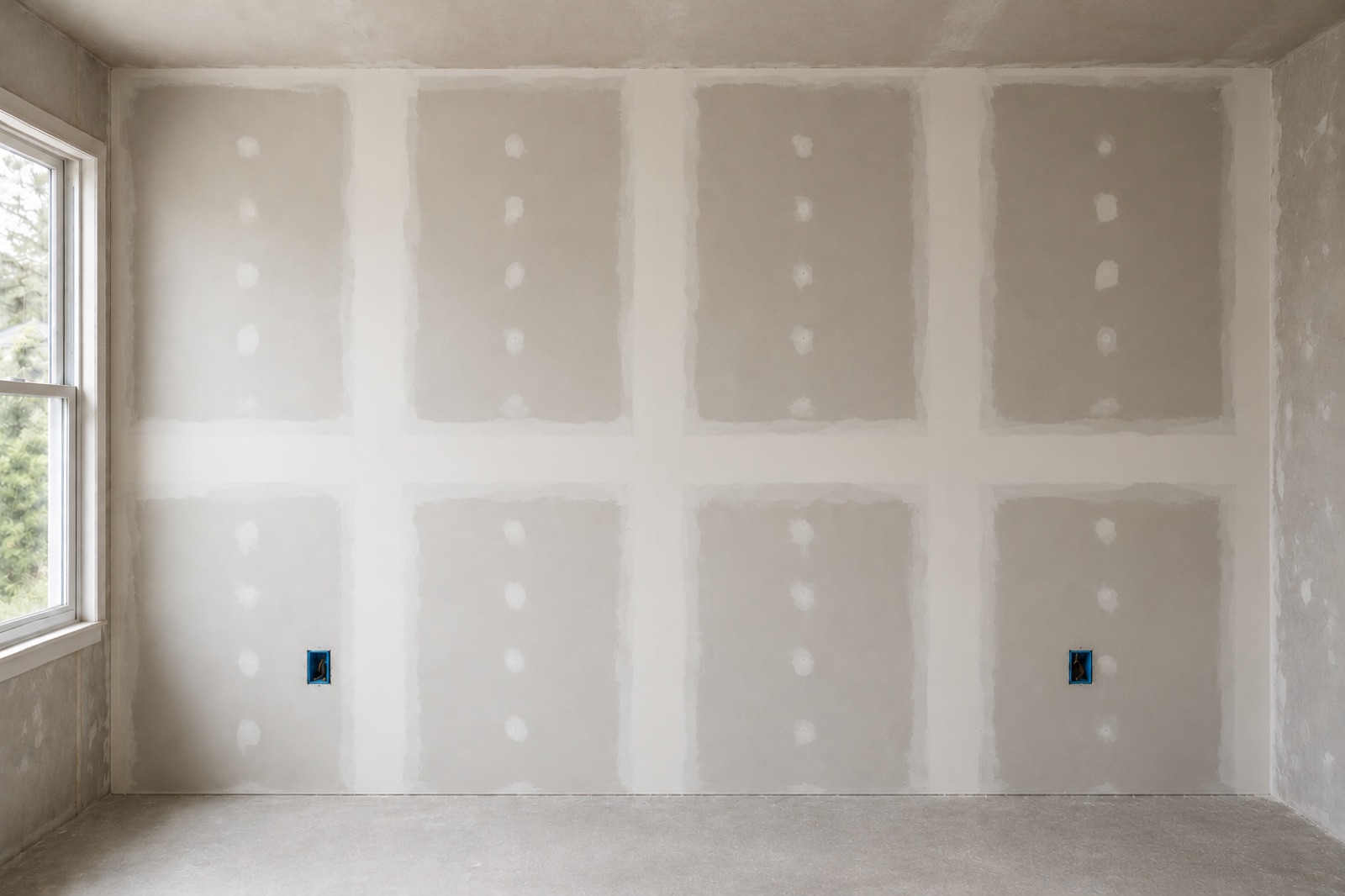
Every house collects wall damage. Doorknob holes, anchor tear-outs from that shelf that came down the hard way, corner bead dings from moving furniture, cracks over doorways, and the stain that showed up under the upstairs bathroom. Castle Construction repairs all of it, and the standard is simple: after paint, you shouldn't be able to point to where the damage was. That takes more than mud in a hole. It takes proper backing, wide feathering, texture matching, and primer that stops the patch from flashing through.
Small Holes to Big Ones: The Right Patch for the Job
Match the method to the damage. Nail holes and anchor tear-outs get filled, sanded, and spot-primed. For fist-sized holes, we cut a California patch: a piece of rock trimmed so its paper face overlaps the hole and gets embedded in mud like tape. No backing needed, no bulge, and it locks in flat. It's a clean trick when it's done right and a lump in your wall when it isn't.
Bigger holes need structure behind them. We square up the damage, screw backing strips inside the cavity, and fasten a fresh inset piece of sheetrock to the strips. Then it gets taped and floated like any new joint, three coats feathered wide. What we won't do is stuff a hole with mesh and mud and hope. An unbacked patch flexes every time the wall gets bumped, and a flexing patch cracks its perimeter within the year.
Water Damage and Cracks That Keep Coming Back
Water-damaged rock gets evaluated honestly. If the core is still firm and the damage is a stain, we can seal it with a stain-blocking primer and refinish. If the board is soft, swollen, or the paper is delaminating, we cut back to sound, dry material past the nearest framing and install new rock. Patching over compromised gypsum just wraps the problem in fresh paint. And the leak gets fixed first, always, or we're both wasting your money.
Recurring cracks tell you something moved. Hairline cracks over doors and windows follow framing stress, and stress cracks that get filled with spackle alone come right back. We open them up, embed tape across the crack to bridge the movement, and float it out. Cracked or crushed corner bead gets cut out and replaced with new bead, not buried under mud. The goal is a repair that holds through the seasons, not one that reopens by spring.
Making the Repair Disappear
A structurally sound patch that you can see from the couch is a failed patch. Blending is where repair work earns its money. We feather compound well past the repair so there's no hard edge for light to catch, then sand and check the area under a raking light, the same low-angle beam we use on full taping jobs. If the patch shadows under that light, it will shadow in your morning sun.
Texture is the other half of invisible. Most walls carry some texture, and a smooth patch in an orange peel wall is a flag that says repair here. We match the existing surface, spraying or troweling to blend the new into the old. Our texture matching service covers this in depth. Then the patch gets primed before paint, because raw mud absorbs paint differently than the surrounding wall and will flash as a dull spot forever if it's skipped.
When a Patch Beats Replacing the Sheet
Homeowners often assume big damage means new drywall, and contractors who bill by the sheet are happy to agree. Usually the patch wins. Replacing a full sheet means disturbing two more seams, refinishing a much larger area, and often repainting the whole wall anyway. A well-executed patch repairs less, blends into more, and costs you a fraction of it. Castle Construction defaults to the repair unless the rock itself is the problem.
The sheet loses when the board has lost integrity: soaked and softened by water, sagging off its fasteners, riddled with damage across its face, or hiding mold on the back side. It also loses when a wall is so beat up that patching would mean skim-coating most of it anyway, at which point new rock or a full Level 5 skim through our taping and floating service is honest money better spent. We'll walk you through the call before any cutting starts.
- Patch it: holes, dents, anchor tear-outs, isolated cracks
- Patch it: dry stains that seal with stain-blocking primer
- Replace it: soft, swollen, or crumbling water-damaged board
- Replace it: suspected mold on the back of the rock
- Replace it: damage covering most of the sheet's face
Common Questions
Will I be able to see the patch after you paint?
Not if we've done our job. We feather the compound wide, match the existing texture, prime the repair, and check it under raking light before paint. That last step matters: a patch that passes under a hard low-angle light will pass in daylight. That's the standard we hold every repair to.
What is a California patch?
A repair for medium-sized holes where the drywall piece is cut oversized, then the gypsum is snapped back so a border of paper face remains. That paper flap gets embedded in joint compound around the hole, working like built-in tape. Done right, it's strong, flat, and needs no backing behind the wall.
My ceiling has a brown water stain. Is that a big repair?
Depends on the board underneath. Once the leak is fixed and everything is dry, a firm ceiling usually just needs stain-blocking primer and refinishing. If the rock is soft or sagging, we cut back to sound material and patch in new board. We check with our hands, not just our eyes.
Why does the same crack keep coming back every year?
Because it's being filled instead of bridged. Cracks from framing movement will reopen through any amount of spackle. The fix is embedding tape across the crack so the joint can absorb movement, then floating it flush. If a crack has beaten two or three repairs already, it needs tape, not more mud.
Let's get your drywall handled.
Straight answers, fair numbers, walls built like they matter.
Get a Free Quote