
Drywall & Sheetrock
Hung straight, taped tight, sanded flat, and checked under a raking light before we call it done. From new sheetrock to patches you'll never find again, we build walls that hold up.
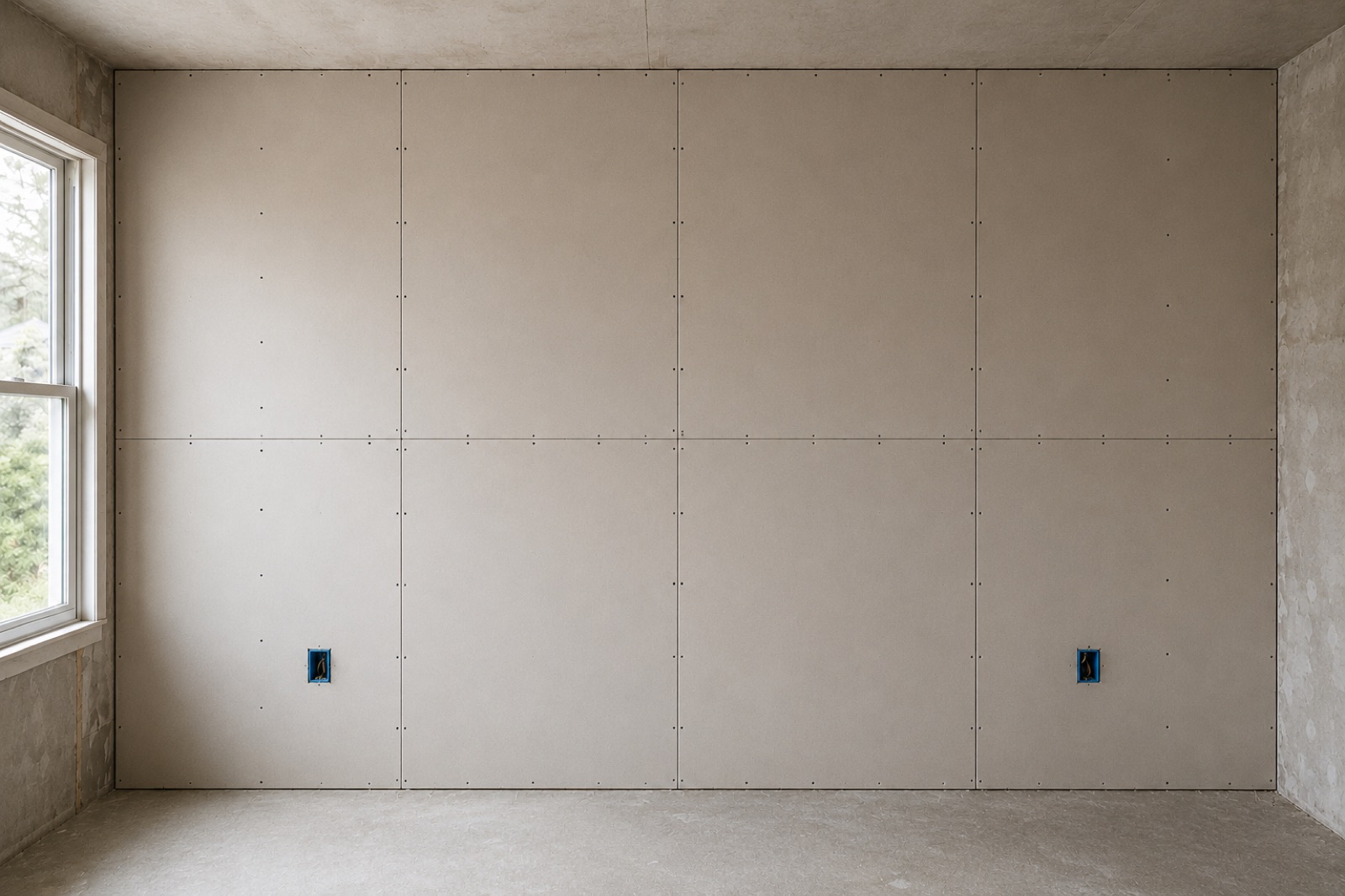
Drywall looks simple until you see a bad job in afternoon sun. Ridged seams, proud screws, patches that flash through the paint. Castle Construction hangs, tapes, and finishes sheetrock the way it should be done: sheets laid out to minimize butt joints, screws set to the right depth without breaking the paper, tape embedded in a full bed of mud, and every coat feathered wide so the wall reads flat from any angle. One room or a whole floor, the standard doesn't change.
We handle the full range of drywall work. New installation for additions, basements, and garage conversions. Patch and repair for holes, cracks, and water damage. Taping and floating on rock somebody else hung. Texture matching so a repair disappears into the wall around it. Ceiling work, which is its own animal. And because Castle Construction paints too, the same crew that finishes your walls can prime and paint them, so nothing gets lost in the handoff between trades.
What the Service Covers
Drywall is a sequence of trades stacked on top of each other, and we do all of them. Hanging is carpentry: reading the framing, planning the sheet layout, cutting clean openings for boxes and cans. Taping and floating is where flat walls are actually made, coat by coat. Texture is applied chemistry and timing. Repair is detective work, figuring out why the crack showed up before you hide it.
Most jobs pull from more than one of these. A basement finish is hanging plus taping plus texture. A water leak is demo, repair, texture match, and paint. We scope the whole chain up front so you get one plan and one crew instead of three subcontractors pointing at each other. The pages below break down each service, but they all run on the same rule: the wall is done when it looks right under hard light, not before.
- New drywall installation for builds, additions, and basements
- Patch and repair, from anchor tear-outs to water damage
- Taping and floating to a Level 4 or Level 5 finish
- Texture matching: orange peel, knockdown, skip trowel
- Ceiling repair, popcorn removal, and new lids
- Priming and painting by the same crew
How We Work
First we protect the house. Floors covered, doorways sealed with plastic, and dust containment on any sanding. Drywall dust travels, and a crew that doesn't control it will cost you a week of cleaning. Then the work runs in order: hang the rock tight to the framing, set corner bead plumb and straight, embed the tape, and build the joints out with the right mud for the job. Hot mud, 20-minute or 45, where we need fast set and hard fill. Bucket mud where we need workability and an easy sand.
Between coats we let things dry honestly and knock down the high spots before the next pass. Rushing coats is how you get shrinkage cracks and pitted seams six months later. The last step is ours before it's yours: we sand, then walk every wall with a bright light held low against the surface. Anything that shadows gets touched up. Then we prime, because bare mud and bare paper take paint differently, and you'll see the difference forever if nobody deals with it.
Finish Levels and the Raking Light Test
The industry grades drywall finishing in levels, and it matters more than most homeowners are ever told. Level 4 is the standard residential finish: tape embedded, three coats on the joints, fasteners and beads coated and sanded. It's right for flat and eggshell paint in normal light. Level 5 adds a thin skim coat over the entire surface, so the whole wall is mud instead of a patchwork of mud and paper. That's what you want under semi-gloss, dark colors, or a wall that catches window light down its length.
Raking light is how we check our own work. Light traveling nearly parallel to a surface exaggerates every ridge, dip, and scratch, which is exactly what the sun does through your windows twice a day. So we bring the hard light to the job before you live with it. If a seam telegraphs or a screw dimples under that beam, it gets skimmed and sanded again. No extra charge for meeting the standard. That's just what the standard is.
- Level 4: standard finish for flat and eggshell paint
- Level 5: full skim coat for gloss, dark colors, and hard light
- Butt joints floated extra wide so they don't shadow
- Fasteners checked for dimple depth and coated flush
- Every surface walked with a raking light before primer
Repair or Replace: How We Make the Call
Not every ugly wall needs new rock, and not every small stain is a small problem. The line is structural. If the gypsum core is dry, solid, and just cosmetically beat up, a proper patch or a skim coat brings it back for a fraction of replacement cost. Holes, cracks, dents, and old anchor tear-outs almost always fall on this side of the line. Even sizable damage can be bridged with a California patch or backed with strips and a clean inset piece.
Water changes the math. Sheetrock that's been soaked loses its core strength, and the paper face becomes a food source for mold. If the board is soft, crumbling, sagging, or stained across a wide area, we cut back to sound material and replace, always past the nearest framing so the new piece has something to land on. We'll tell you straight which side of the line your wall is on, and we don't sell replacement when a repair will hold.
Why a Drywall Specialist Beats a Painter with a Mud Pan
Plenty of painters will patch a wall, and some do decent small repairs. But taping is its own trade with its own muscle memory. A generalist reaches for mesh tape and one heavy coat because it's fast. A finisher knows paper tape in a full mud bed makes a stronger joint on flats and corners, knows when mesh with hot mud is actually the right call, and knows a joint needs three coats feathered progressively wider to disappear.
The difference shows up after the paint dries, which is the worst possible time to find it. Paint doesn't hide bad taping. It highlights it, especially in any sheen above flat. Ridged seams, fat corners, fastener pops, and flashing patches all telegraph straight through. Castle Construction finishes the substrate right so the paint has something worth covering. If a wall needs a Level 5 skim to carry the color you picked, we'll say so before anyone opens a can.
Finished and Painted by One Crew
Drywall and paint are two halves of the same result, and splitting them between companies is where quality leaks out. Fresh joint compound and drywall paper absorb paint at different rates, which causes primer flash: dull and shiny patches that show every seam and fastener location. The fix is simple if the finisher and painter are the same outfit. We prime new work with the right drywall primer, check it under light again, and then paint.
It also means one schedule and one throat to choke. No painter blaming the taper for a seam, no taper blaming the painter for a flash line, no gap between the two while you live in a half-done room. Castle Construction carries the job from bare studs or busted wall to final coat. The name isn't an accident. We build walls like they're meant to be permanent, because they are.
Drywall services
New Drywall Installation
From bare studs to paint-ready walls. Sheets laid out to kill butt joints, screws set to the proper depth, and the right board in every room.
Read more →Drywall /Drywall Patch & Repair
Holes, cracks, water damage, and the divot the doorknob left. We fix the rock, match the texture, and leave a wall nobody can find the repair on.
Read more →Drywall /Taping & Floating
This is where flat walls are made. Tape embedded in a full bed of mud, three coats feathered wide, sanded between passes, and proven under a raking light.
Read more →Drywall /Texture Matching
A perfect patch with the wrong texture is still a visible patch. We match orange peel, knockdown, and skip trowel until the repair reads as wall, not work.
Read more →Drywall /Ceiling Repair & Installation
Ceilings are the most unforgiving drywall in the house. Light rakes across the whole lid all day, so ours get hung heavier, floated flatter, and checked harder.
Read more →Common Questions
What's the difference between drywall and sheetrock?
Nothing, in practice. Sheetrock is a brand name for drywall the same way Kleenex is for tissue, and tradesmen use the words interchangeably. Both mean gypsum board: a plaster core wrapped in paper, hung on framing, and finished with tape and joint compound. Whatever you call it on the phone, we know what you mean.
What finish level do I actually need?
Level 4 covers most homes: flat or eggshell paint, normal lighting. Go to Level 5, which adds a skim coat over the whole surface, if you're using semi-gloss, dark or deep colors, or the wall catches strong side light from a big window. Ceilings with recessed cans often justify Level 5 too. We'll recommend one after seeing the room.
Can you match the texture that's already on my walls?
Yes, that's a core part of our repair work. We identify the texture, whether orange peel, knockdown, or skip trowel, then dial in the mix and technique on test boards before touching your wall. A patch is only invisible if the texture and sheen carry across it, so we treat matching as part of the repair, not an add-on.
How bad is the dust going to be?
Sanding joint compound makes fine dust, no way around that. What we control is where it goes. We seal the work area with plastic, cover floors and returns, use dust-collecting sanders where the job allows, and clean up daily. You should get your room back needing a normal cleaning, not a restoration project.
Do you paint the walls after finishing them?
Yes. Castle Construction is also a painting contractor, so the same crew that tapes and sands your walls can prime and paint them. That matters on new drywall, where fresh mud and paper need proper priming to avoid flashing. One crew, one standard, and nobody blaming the other trade if something isn't right.
Need drywall done right?
Straight answers, fair numbers, walls built like they matter.
Get a Free Quote