
Drywall & Sheetrock in Tomball
Crack repairs that hold through the seasons, popcorn ceilings gone for good, and clean board hung in shops and new builds alike, drywall for every age of Tomball house.
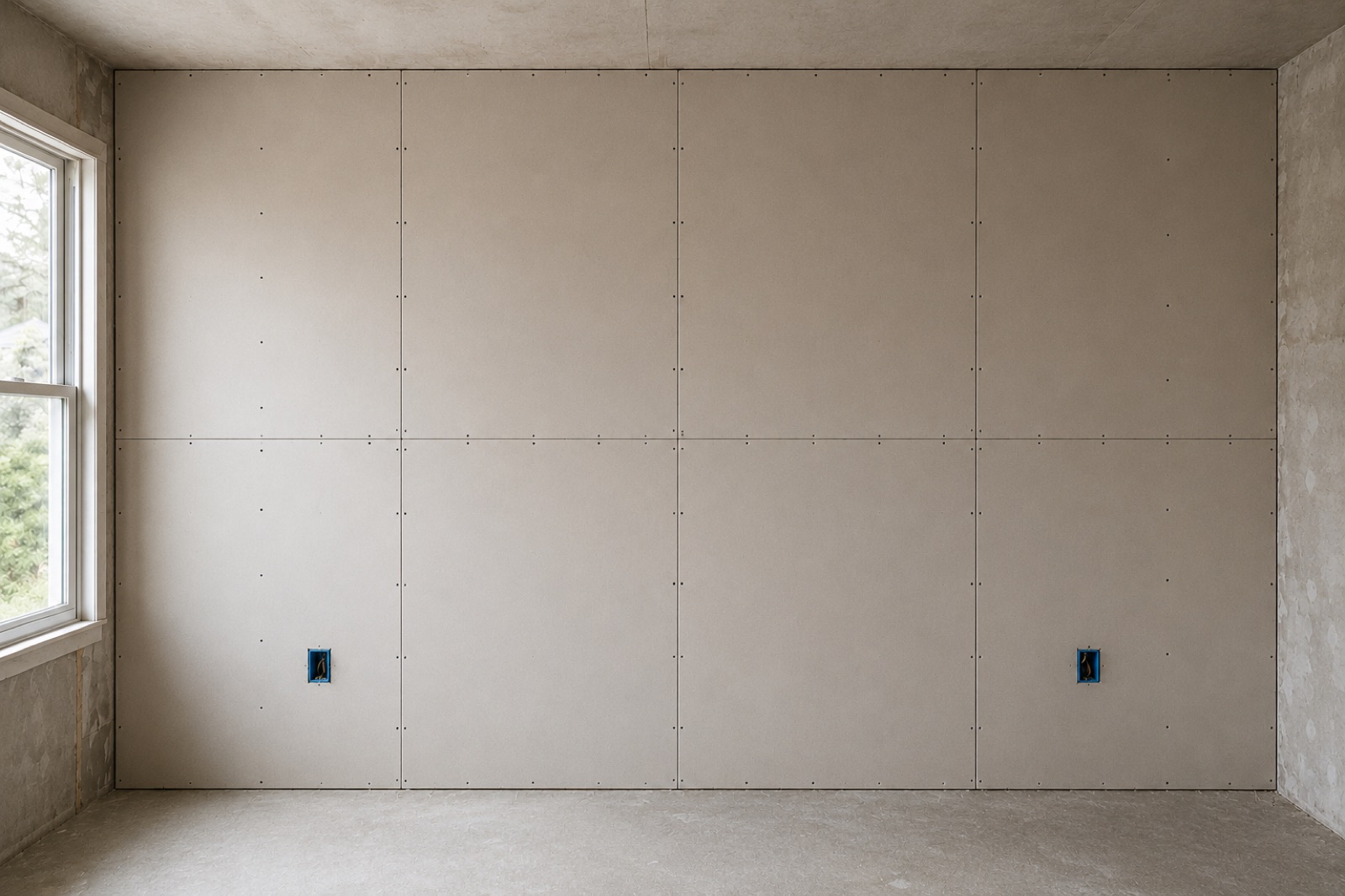
Tomball drywall work spans sixty years of construction habits. In Old Town, walls carry heavy texture and generations of patches, and pier-and-beam movement keeps reopening lazy repairs. In Amira and Wildwood at Northpointe, young frames are still drying out, popping nails and cracking corners. And on acreage off Rosehill, half the drywall calls are for shops and outbuildings that need board hung and finished right. Castle Construction reads the house first, then repairs it the way that particular construction demands, Level 4 under texture, Level 5 where smooth walls meet hard light.
Repairs That Survive Pier-and-Beam Movement
Older Tomball houses move with the seasons, soil swells, beams flex, and hairline cracks open along the same lines every year. The classic bad repair is spackle pressed into the crack and painted over; it splits again the first time the weather turns. We do it properly: cut the crack open, tape it with mesh or paper as the situation calls for, float it in progressively wider coats, and retexture so the line disappears instead of just hiding until October.
We are also straight with you about limits. If cracks are wide, offset, or marching across multiple rooms, the house may need attention under the floor before the walls are worth finishing. We will say so plainly, because patching over active movement wastes your money and our name. Once things are stable, we can come back through and take the walls to a finish that holds, including skim-coating rooms where sixty years of patches have left the surface lumpy under afternoon sun.
Popcorn Removal and Ceiling Updates
A lot of Old Town and 1980s-era Tomball ceilings still wear popcorn, and taking it down is one of the most satisfying updates a house of that age can get. Our process is containment-first: floors and walls masked in plastic, the texture wetted and scraped clean, then the ceiling skim-coated because the board underneath is never as flat as anyone hopes. From there you choose smooth, or a light knockdown that suits the house.
On older ceilings we scrape a test patch before quoting, because painted-over popcorn behaves differently than bare texture and the age of a house tells us to check what we are dealing with before disturbing large areas. Once the lid is skimmed, we prime with a stain-blocking primer, old ceilings almost always carry a water mark or two from their history, and finish with ceiling paint rolled to an even, glare-free surface.
New-Build Fixes in Amira and Wildwood
The newer sections, Amira, Wildwood at Northpointe, Lakes at Creekside, generate the classic new-construction drywall list. Framing lumber dries through the first two or three summers and the walls tell on it: nail pops in stairwells and ceilings, diagonal cracks off door and window corners, tape ridges where joints were rushed on the production schedule. All fixable, and worth fixing properly once the house has done most of its settling.
Proper means a screw set beside every popped nail before it is refloated, cracks cut and retaped rather than smeared, and ridges sanded down and skimmed flat. Then the full wall or ceiling plane gets repainted to a break line, because builder touch-up paint from the garage shelf never matches walls that have aged even a year. If you want it done ahead of a warranty deadline, we can document what the builder should cover and handle the rest ourselves.
Shops, Garages, and Outbuildings
Acreage Tomball keeps us hanging board outside the main house. Workshops near Rosehill and Willowcreek Ranch, detached garages, barn tack rooms, home gyms in old outbuildings, spaces that started as bare studs and deserve better than staying that way. We hang, tape, and finish to the level the space calls for: a working shop might take Level 4 and a coat of bright white to bounce light, while a converted room gets the same finish quality as the house.
Outbuilding work has its own judgment calls, and we make them with you. Unconditioned spaces move more, so joints get set up to tolerate it. Moisture-resistant board earns its cost near slab edges and utility sinks. Insulation before board is cheap while the walls are open and miserable to add later. We will walk the building, talk through what you actually use it for, and quote a finish level that fits, not a house-interior spec for a tractor shed.
- Hang, tape, and finish for shops and garages
- Finish levels matched to how the space is used
- Moisture-resistant board where slabs and sinks demand it
- Insulation coordinated before walls close
- Bright, durable topcoats for work spaces
- Joints detailed to tolerate unconditioned movement
Common Questions
Why do the same cracks in my Old Town house keep returning?
Because they were filled, not repaired. Pier-and-beam houses move seasonally, and a crack that gets spackle instead of tape will open along the same line every year. Cutting it out, taping, and floating it wide gives the joint the strength to ride out normal movement.
How messy is popcorn ceiling removal?
Messy for us, not for you. We seal the room in plastic, floors, walls, doorways, before the first scrape, keep the texture wetted so it comes down in sheets instead of dust, and haul out the debris. You get back a skimmed, primed, painted ceiling and a clean room.
Can you drywall my workshop or detached garage?
Yes, that is regular work for us on Tomball acreage. We hang and finish board to suit the building, recommend insulation while the walls are open, and use moisture-resistant sheets where the slab or a utility sink calls for it. Finished shops are brighter, cleaner, and easier to heat and cool.
Need this handled in Tomball?
Straight answers, fair numbers, walls built like they matter.
Get a Free Quote